
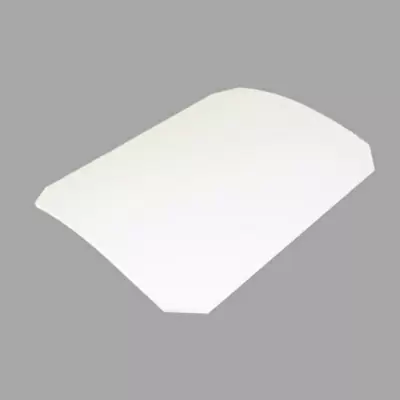
In heavy industries such as mining, power generation, and cement manufacturing, equipment degradation due to friction and impact is a constant challenge. The abrasion resistant ceramic tile has emerged as the definitive solution for protecting machinery and extending operational lifespans. Unlike standard decorative ceramics, these industrial-grade tiles are engineered to withstand severe sliding abrasion, particle impact, and chemical corrosion.
Material Composition and Hardness Standards
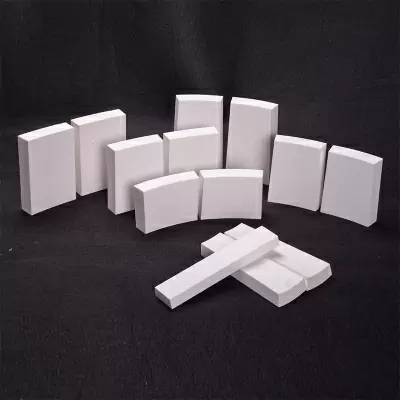
The core of an abrasion resistant ceramic tile is its material composition. These tiles are predominantly manufactured using high-purity aluminum oxide ( Al2O3 ), often referred to as alumina. The performance of the tile is directly correlated to its alumina content, which typically ranges from 92% to 95% or higher.
Key Technical Specifications:
- Hardness: The defining characteristic of these tiles is their extreme hardness. They typically achieve a Rockwell hardness of HRA 80-90. This places their hardness second only to diamond, making them significantly harder than耐磨 steel or manganese steel.
- Density: With a density of ≥3.5 g/cm3 , these tiles are roughly half the weight of steel, reducing the structural load on the equipment they protect.
- Wear Resistance: Comparative studies indicate that the wear resistance of high-alumina ceramic tiles can be equivalent to 266 times that of manganese steel and 171.5 times that of high-chromium cast iron.
Industrial Applications and Use Cases
The application of abrasion resistant ceramic tiles is critical in sectors where material flow causes rapid erosion of metal surfaces.
1. Mining and Mineral Processing
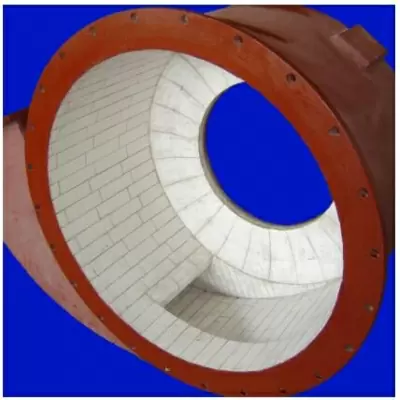
In the mining industry, ore and slurry transport systems are subject to intense friction. Ceramic tiles are bonded to the interiors of chutes, hoppers, and cyclones. Their smooth surface and high hardness prevent material buildup and resist the cutting action of sharp rocks.
2. Power Generation (Coal Handling)
Thermal power plants utilize these tiles in coal conveying systems. Specifically, they are used to line pulverizer components and dust removal systems. The tiles protect the underlying metal structure from the abrasive action of coal dust and ash, significantly reducing maintenance downtime.
3. Steel and Iron Manufacturing
In steel mills, abrasion resistant tiles are installed in bunkers and料仓 (silos) to handle iron ore and sinter. The tiles withstand the high-impact force of falling materials and the sliding abrasion of heavy loads.
Installation and Bonding Technology
The effectiveness of an abrasion resistant ceramic tile system relies heavily on the installation method. Two primary methods are utilized:
- Adhesive Bonding: For applications with moderate temperatures (typically below 150°C – 350°C), high-strength epoxy adhesives or ceramic structure glues are used. These specialized adhesives ensure the tile remains firmly attached to the steel substrate even under vibration.
- High-Temperature Bonding: For extreme environments, such as inside kilns or near exhaust systems, heat-resistant cements or mechanical fastening (bolting) combined with ceramic arc welding studs are employed to ensure longevity.
The Economic Impact of Wear Protection
Implementing abrasion resistant ceramic tiles offers a substantial return on investment. By replacing standard steel liners with ceramic tiles, facilities can extend the service life of their equipment by a factor of 10 or more. This reduction in wear translates to fewer shutdowns for repairs, lower replacement part costs, and sustained operational efficiency. Furthermore, the lightweight nature of the tiles compared to steel liners can reduce the overall weight of moving machinery, potentially lowering energy consumption.
FAQ
Q1: What is the primary difference between industrial abrasion resistant tiles and standard floor tiles?
A: Industrial abrasion resistant tiles are composed of high-alumina content ( Al2O3≥92% ) designed for extreme hardness (HRA 80-90) and impact resistance, whereas standard floor tiles prioritize aesthetics and lower mechanical strength.
Q2: Can these ceramic tiles withstand high temperatures?
A: Yes. High-purity alumina ceramic tiles can withstand temperatures exceeding 1000°C. However, the bonding agent (adhesive) usually dictates the maximum operating temperature of the lining system, with specialized glues capable of handling up to 350°C.
Q3: How does the weight of ceramic tile compare to steel?
A: Alumina ceramic tiles have a density of approximately 3.6 g/cm³, which is roughly half the density of steel. This makes them an excellent choice for retrofitting equipment where weight reduction is beneficial.
Q4: Are these tiles suitable for corrosive environments?
A: Yes. High-alumina ceramics are chemically inert and offer excellent resistance to acids, alkalis, and organic solvents, making them suitable for corrosive industrial environments.