
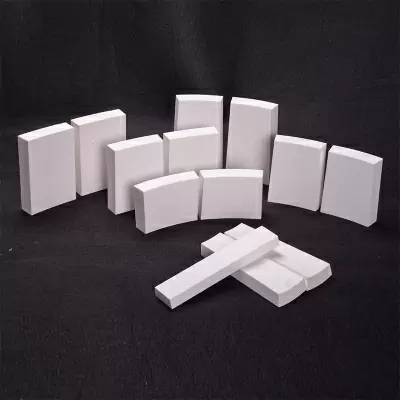
An alumina ceramic sheet is a flat, advanced technical ceramic made primarily from aluminum oxide (Al2O3). Renowned for its exceptional hardness and electrical insulation properties, this material is a critical component in industries ranging from electronics to heavy mining. Unlike traditional materials that degrade under heat or friction, an alumina ceramic sheet provides a durable, non-conductive surface that withstands extreme environmental stress.
Material Composition and Purity Levels
The performance of an alumina ceramic sheet is determined by its alumina content. Manufacturers produce these sheets in various grades to suit specific operational demands.
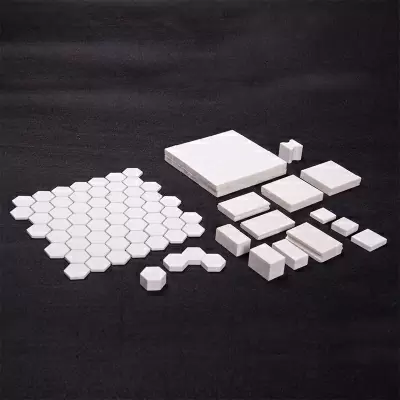
Common Industrial Grades:
96% Alumina: This is the most common grade for industrial wear plates. It offers an excellent balance of mechanical strength, thermal resistance, and cost-effectiveness.
99% Alumina (High Purity): Used in semiconductor and electronics manufacturing, this grade offers superior dielectric strength and thermal conductivity, making it ideal for substrates and insulators.
Key Physical Properties
When specifying an alumina ceramic sheet, engineers evaluate several critical physical metrics to ensure reliability.
Hardness and Wear Resistance: With a Mohs hardness of 9, alumina is nearly as hard as diamond. This allows the sheet to resist severe abrasion from sliding and impact wear, outperforming steel by a factor of 10 to 20 times in many applications.
Electrical Insulation: Alumina ceramic sheets are excellent electrical insulators. They maintain high resistivity even at high temperatures, preventing electrical arcing and short circuits in high-voltage environments.
Thermal Properties: These sheets can withstand continuous operating temperatures of up to 1600°C in oxidizing atmospheres. Additionally, they exhibit low thermal expansion, ensuring dimensional stability during thermal cycling.
Industrial Applications
The versatility of the alumina ceramic sheet allows it to solve complex engineering problems across various sectors.
1. Electrical Insulation In power electronics and switchgear, alumina sheets are used as insulating barriers and substrates. Their ability to dissipate heat while blocking electricity protects sensitive components from failure.
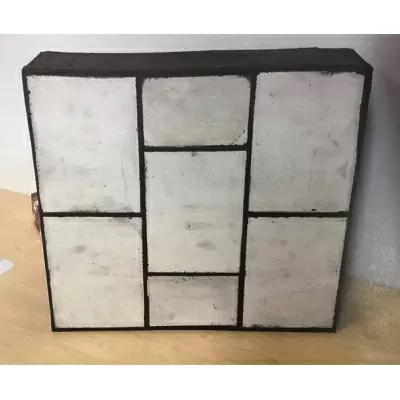
2. Wear Protection Linings In the mining and mineral processing industries, chutes, hoppers, and cyclones are lined with alumina ceramic sheets. The sheets are often bonded to a steel backing plate to create a composite armor that protects the structural integrity of the equipment from erosive slurries and bulk materials.
3. Semiconductor Manufacturing High-purity alumina sheets are used as wafer processing tables and handling components. Their chemical inertness ensures that no contaminants are introduced into the cleanroom environment during the fabrication of microchips.
Advantages Over Alternative Materials
Switching from rubber, polymer, or metal linings to an alumina ceramic sheet solution provides significant operational benefits.
Extended Service Life: The extreme hardness of alumina drastically reduces the wear rate, leading to fewer plant shutdowns for maintenance.
Lightweight Protection: Although dense, alumina ceramic is lighter than steel. A ceramic-lined chute weighs less than a solid manganese steel alternative, simplifying installation and structural support requirements.
Chemical Inertness: Alumina ceramic sheets do not react with most acids or alkalis, making them suitable for corrosive chemical processing environments where metal would dissolve.
FAQ
Q1: What is an alumina ceramic sheet? A: An alumina ceramic sheet is a flat technical ceramic component made from sintered aluminum oxide powder. It is engineered for high wear resistance, electrical insulation, and thermal stability.
Q2: What are the standard thicknesses for alumina sheets? A: Industrial alumina ceramic sheets are typically available in thicknesses ranging from 1.0 mm to 20 mm, depending on the required impact resistance and installation method.
Q3: Can alumina ceramic sheets be cut to size? A: Yes. While the material is extremely hard, alumina sheets can be precisely cut, drilled, or ground using diamond-tipped tools to fit specific dimensional requirements.
Q4: How is an alumina sheet bonded to metal equipment? A: The sheets are typically bonded using high-strength, flexible structural adhesives designed to withstand thermal expansion and mechanical vibration.